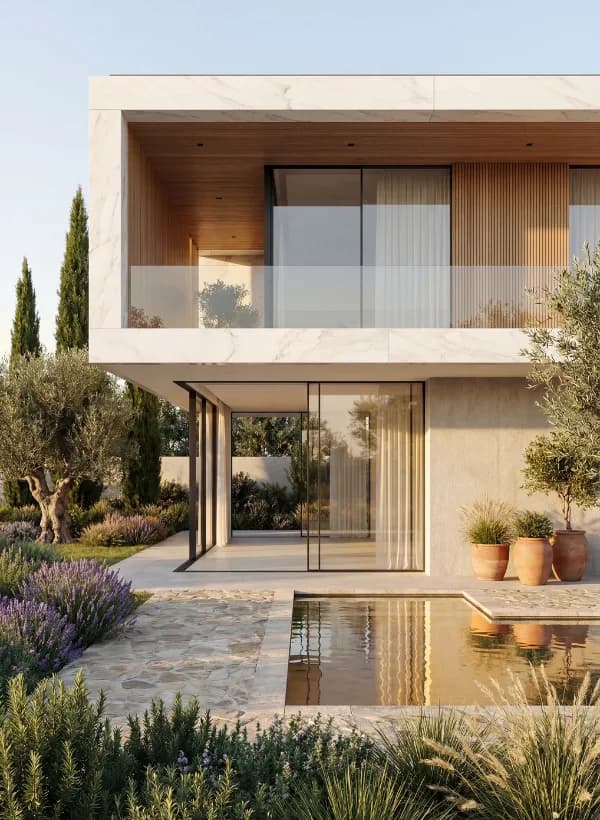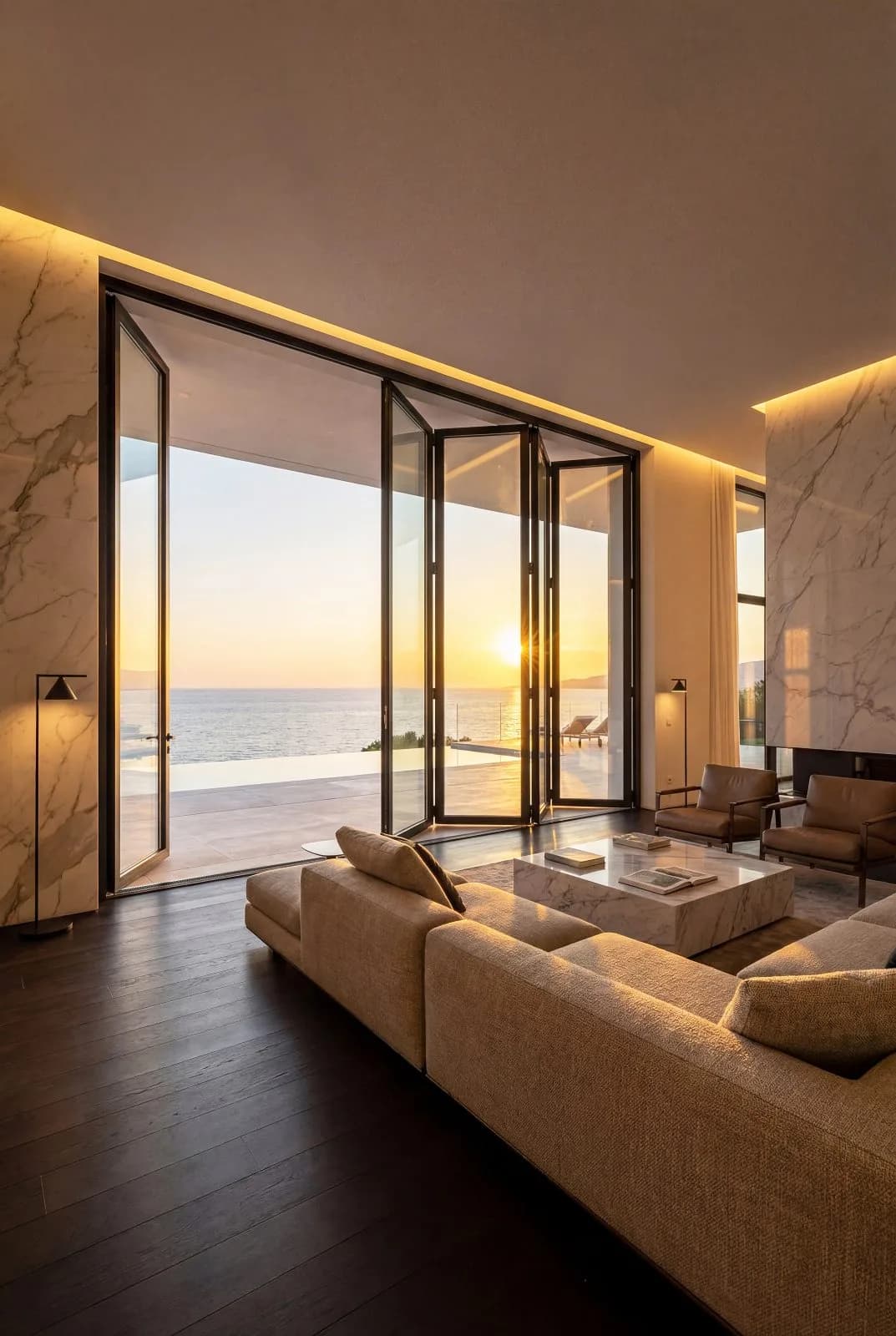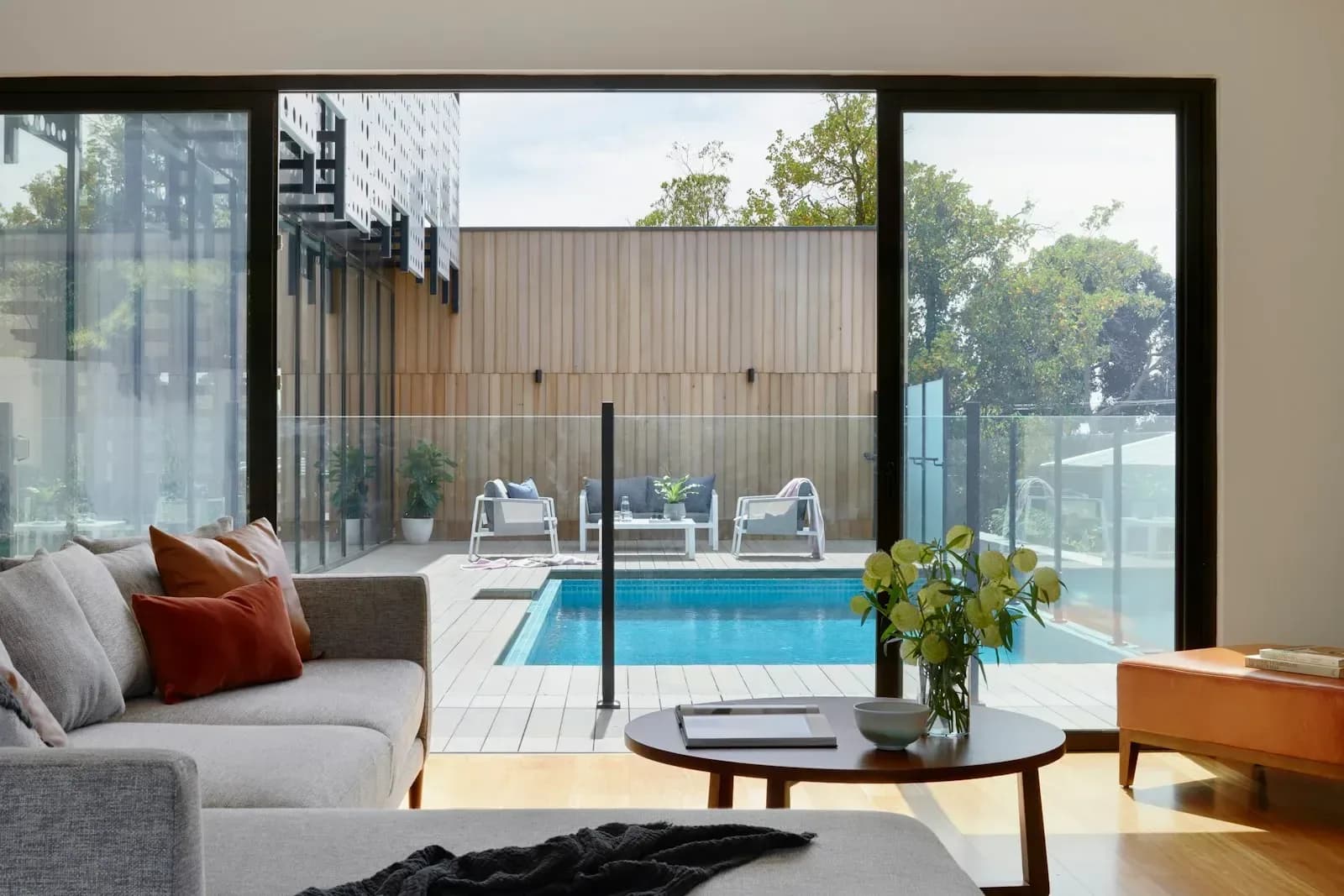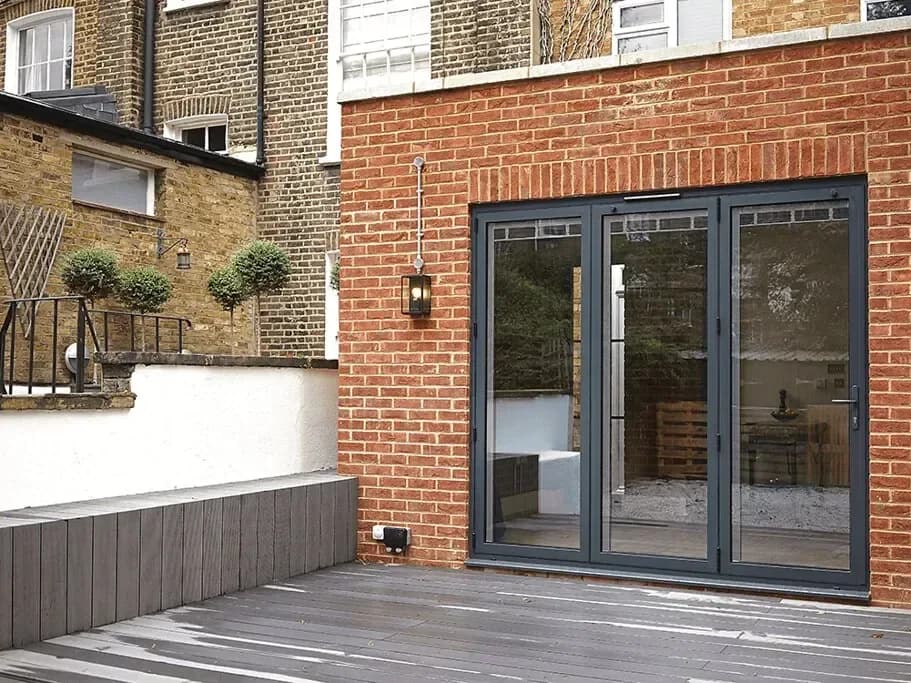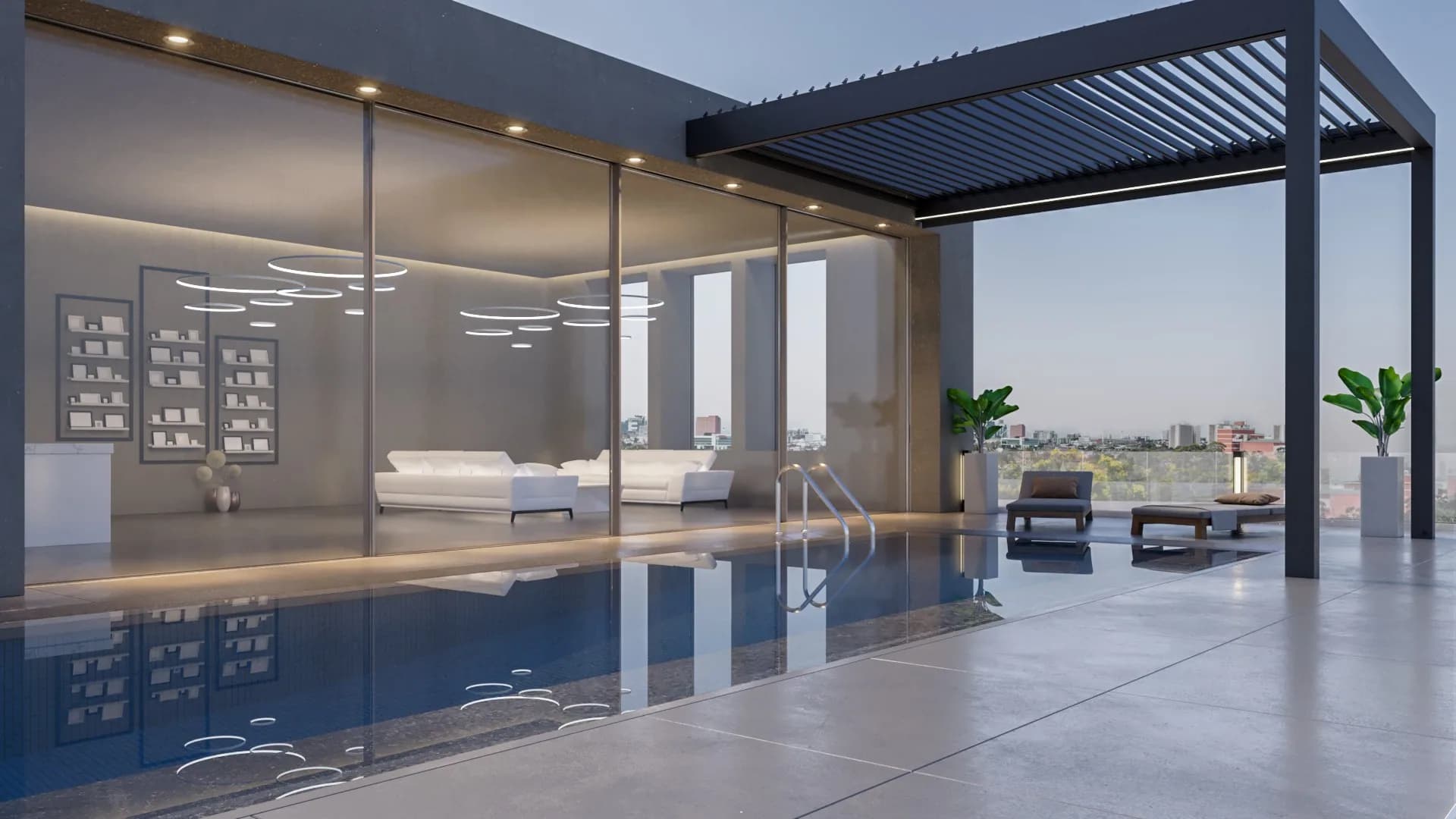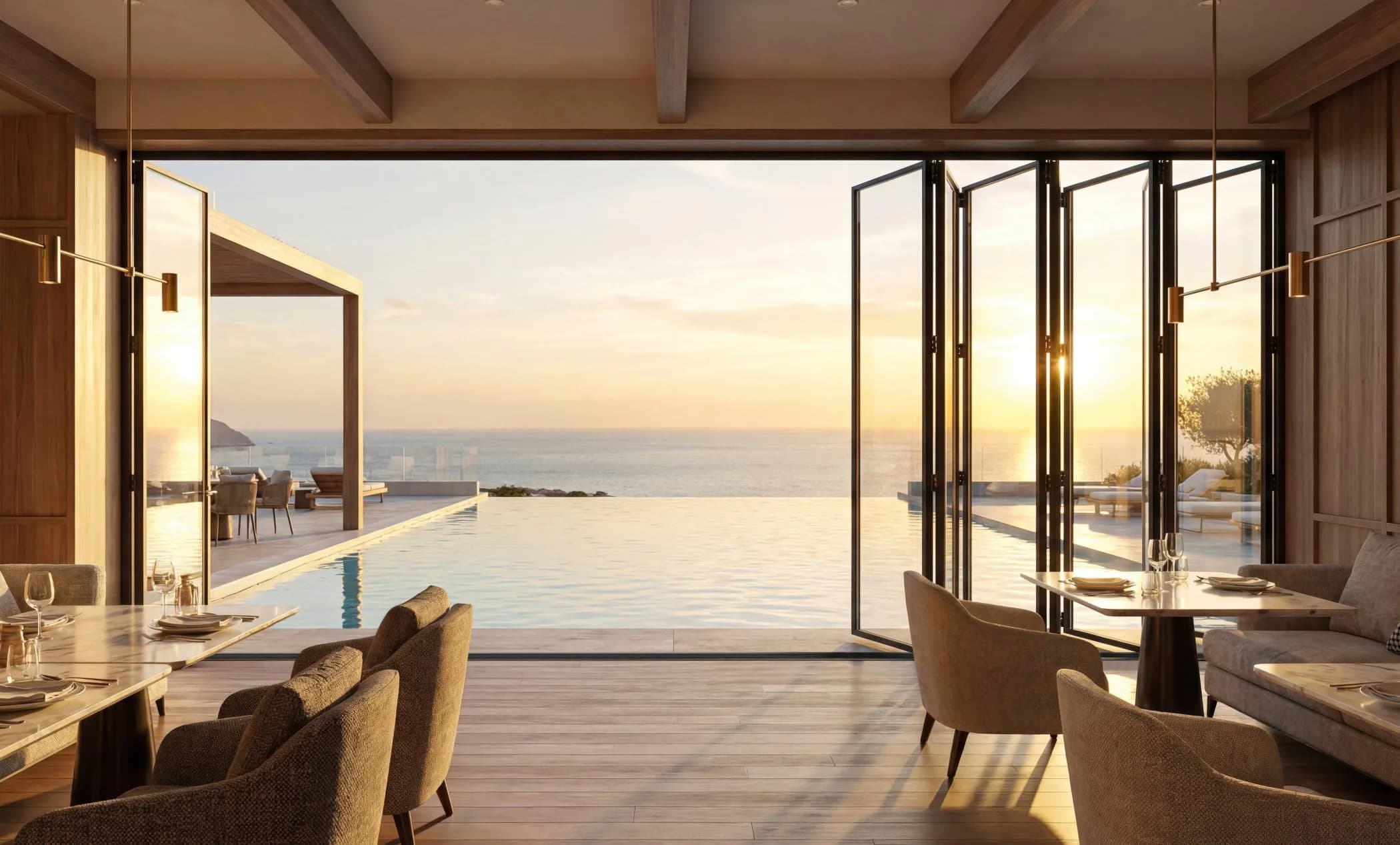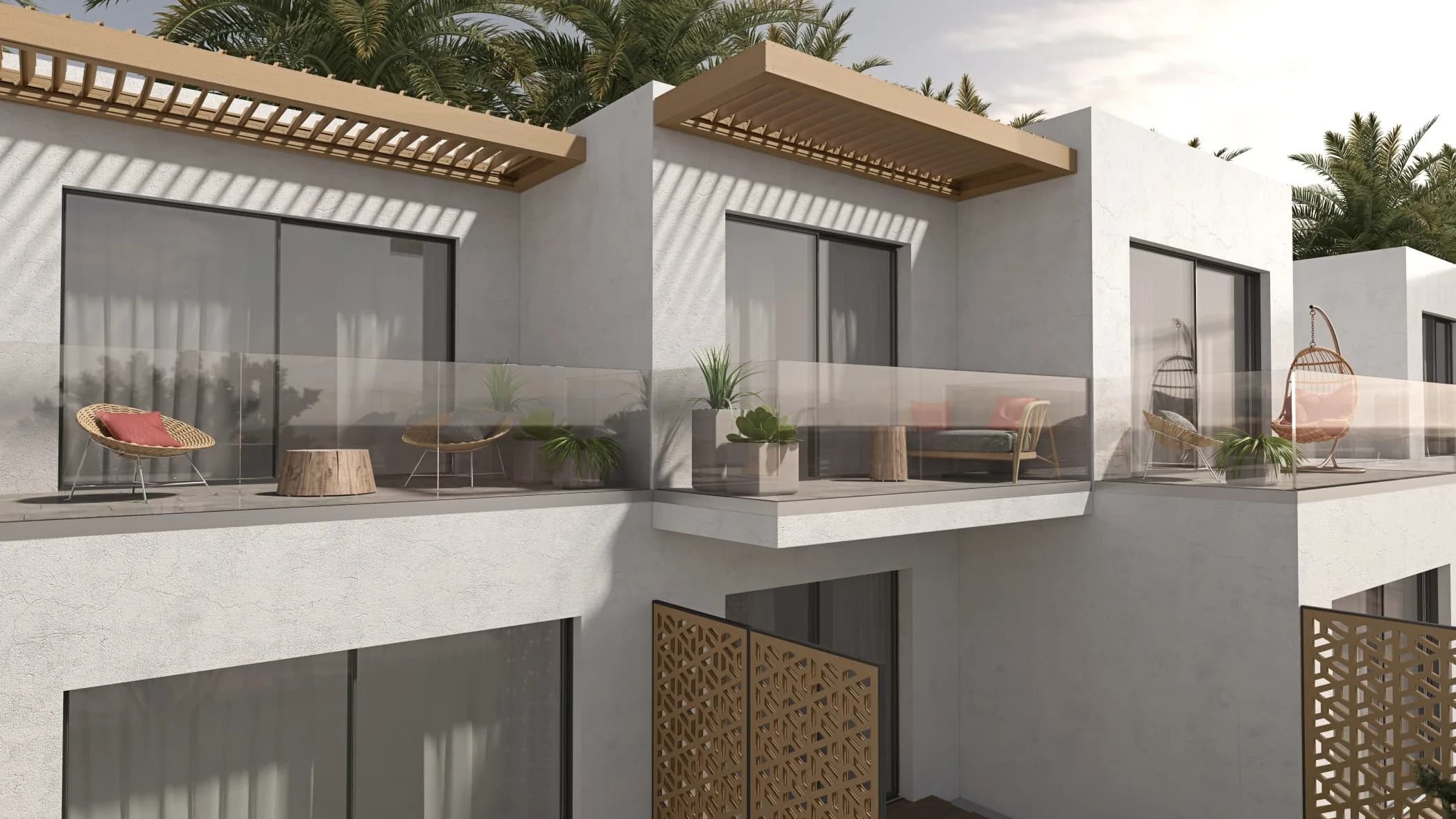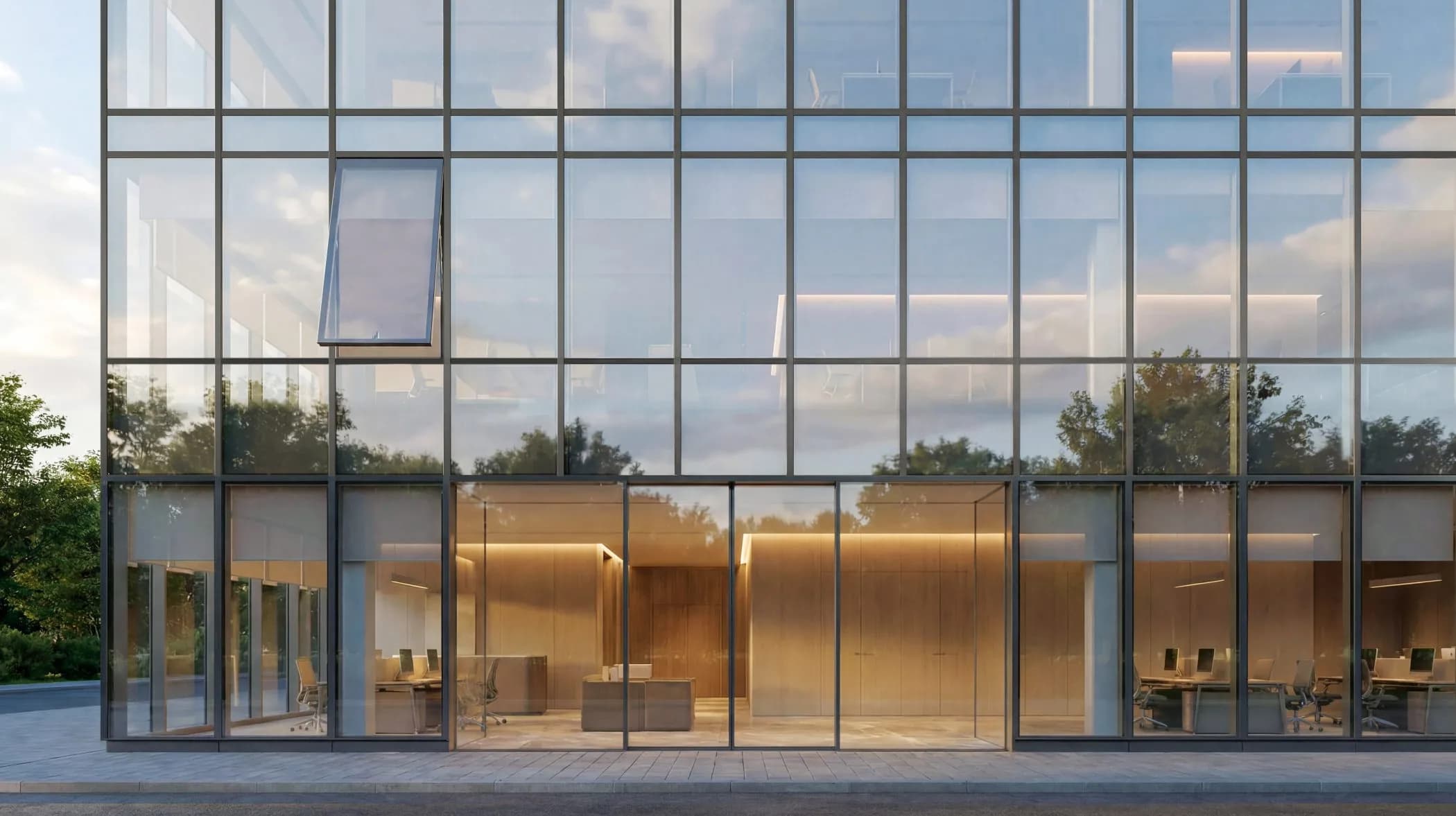


Choose bi-folds if fully opening the wall matters most — they concertina back to leave up to 90% of the opening clear. Choose sliders if the view matters most — fewer, bigger panes mean slimmer interruptions and more glass, but only around half of the opening can actually open. That single trade-off — maximum opening versus maximum glass — decides most projects, and the rest of this guide covers the practicalities that decide the close calls.
How each door works
A bi-folding door is a set of panels hinged together that fold flat against each other and stack to one or both sides, running on top-hung carriages. Two to eight panels cover openings from a modest doorway to a whole elevation.
A sliding door moves large glass panels horizontally along parallel tracks. Panels can be far bigger — in minimal systems, up to twelve square metres and a tonne each — because they roll rather than hang and fold. Lift-and-slide variants raise the sash off its gaskets to move, then drop it into a compressed seal when closed.
The view, closed: where sliders win
Doors spend most of the year closed, which is easy to forget in a summer showroom. Closed, a three-panel bi-fold across a four-metre opening shows two full vertical frame pairs; a slider covers the same span with one slim interlock — as little as 26mm of visible frame in a minimal system. If the project brief is "a wall of glass looking at the garden", sliders deliver it in a way bi-folds cannot.
The opening, open: where bi-folds win
Open, the comparison reverses. Bi-folds clear almost the entire aperture — the stacked panels occupy a short return at one end. Sliders always keep at least one panel's width of glass in the opening (pocket sliders that disappear into the wall cavity are the exception, where the build allows). For parties, summer living and a genuine inside-outside kitchen, nothing matches a fully folded-back bi-fold.
Everyday practicality
- The traffic door. A bi-fold can include an independently hinged access door, so nipping to the garden doesn't mean folding the set. Without one, daily use is a real friction point.
- Effort. Both run smoothly when well made; large slider sashes feel more effortless for their size, and motorised operation is available on premium sliding systems.
- Ventilation. Bi-folds vent flexibly — fold back one panel or two. Sliders vent by sliding a panel, though lift-and-slide doors can be locked slightly ajar.
- Thresholds. Both are available with low or flush-recessed thresholds for step-free access; drainage detailing matters more than the door type. Discuss exposure with your installer.
- Space. Bi-folds need clear space for the stacked panels to fold into (in or out). Sliders need none — panels travel within their own plane.
Performance and security
Thermally, comparable systems from the same range perform similarly — our folding doors achieve Uw from 1.2 W/m²K and premium sliders from 1.0 W/m²K; glazing choice moves the number more than door type. Acoustically, sliders' fewer joints give them a slight edge on busy roads. On security, look past the door type to the testing: multi-point locking, anti-lift blocks on sliders, shootbolts and concealed restraints on bi-folds, and laminated glass options on both.
Cost logic
Like-for-like, a quality bi-fold and a mid-range slider across the same opening often land close together: bi-folds carry more hardware, hinges and fabrication per metre, while sliders carry bigger, heavier glass units. Costs diverge at the top end — very large minimal-frame sliders are a premium product because of the glass engineering involved. We have covered the wider picture in what drives aluminium glazing costs; for a real project, real numbers beat rules of thumb.
Can't decide? Combine them
On larger extensions the strongest designs often use both systems where each is best. A common pattern: a wide sliding door across the main view for the glass-wall effect, with a bi-fold or glazed door set on the return elevation for full summer opening and daily traffic. Because both come from one aluminium range, frames, colours and thresholds match across the elevation — one design language, two behaviours. Corner arrangements are another option worth knowing about: open-corner sliders meet at ninety degrees with no fixed post, dissolving the corner of the room entirely when open.
What about draughts and weather?
A fair historical criticism of early bi-folds was wind noise through the many meeting joints. Modern systems answer it with compressed gaskets at every interlock, magnetic panel restraints and multi-point locking that pulls each leaf tight against its seals; our folding doors are weather-tested to the same EN standards as the windows. Lift-and-slide doors go a step further for exposed sites — the sash drops onto continuous compressed gaskets when closed, which is why they suit coastal and hilltop plots particularly well. Whichever you choose, ask for the tested air-permeability and watertightness classes for the actual configuration, not the range's best case.
A quick decision guide
| Your priority | Better fit |
|---|---|
| Whole wall opens in summer | Bi-fold |
| Best view when closed (most of the year) | Slider |
| Openings above ~6m as one run | Slider (or combine both) |
| Daily garden access without opening everything | Bi-fold with traffic door |
| Slimmest possible frames | Minimal slider |
| Flexible everyday ventilation | Bi-fold |
See real numbers for your opening
Measure the structural opening width and height, note which way panels could stack or slide, and request a quote for both options — we price bi-fold and sliding configurations side by side so you can compare on your actual sizes, not brochure examples.
This article is general guidance, not a project specification. Performance figures such as U-values depend on configuration and glazing, and your quotation states the tested values for your exact specification.
Get a Free Quotation
Send your sizes or drawings — itemised quotes usually within 2–3 working days.
Questions Answered
Are bi-fold doors more expensive than sliding doors?
Which is more secure, bi-fold or sliding doors?
How much of the opening actually opens?
Can bi-fold and sliding doors have level thresholds?

Written by
SIVAL Technical Team
Aluminium systems specialists
The SIVAL technical team shares practical, evidence-based advice on aluminium windows, doors and glazing — from U-values and Building Regulations to choosing the right system for your project.